
Archive: Darcus Wolfson’s account was originally published in 2018. In a 2026 follow-up, the author says the reported burial at Taxal may have been confused with another burial and that the skull’s fate remains unknown. Please respect the privacy of the farm’s residents.
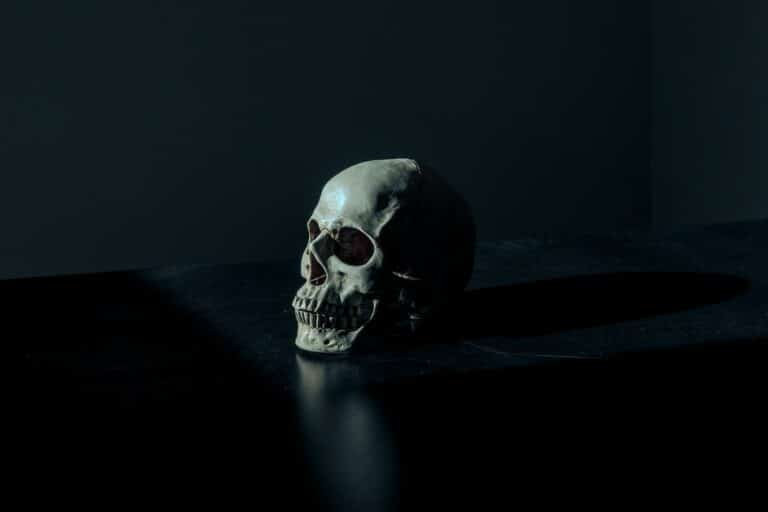
Dicky’s Skull, or Dickie, is a fairly well-known Peak District legend. The haunted cranium is a standard inclusion in an endless sequence of Derbyshire guidebooks and much has been written about it already. However, my own investigation can provide you with an updated overview of the whole mystery, as well as the unearthing of an obscure stage play called Plays of Derbyshire Life: Dickie’s Skull. Seeing as the nights are drawing in and the witches’ eve is fast-approaching, I thought I would visit Dicky again and perhaps, finally put the poor soul to rest.
Origins of the Skull
There is some uncertainty about who exactly the skull belonged to and how it came to reside at Tunstead Farm near the town of Chapel-en-le-Frith. One version of the story names its owner as Ned Dickinson who returned from the Huguenot Wars in France (1562-98) to reclaim his farm, only to find it had been taken over by his murderous cousins who were not too keen to give it back. They chopped off Ned’s head and buried him in the garden, only to find the severed bonce back in the house one dark night, where it insisted on remaining.
An 1895 collection of Derbyshire folklore tells a different story of a woman killed by her sister after a dispute over a man. Its setting in the former Royal Forest of the Peak does not establish when the story originated.
In the various stories, the skull was associated with an untimely death, and people believed misfortune would follow if it was removed from the farm.
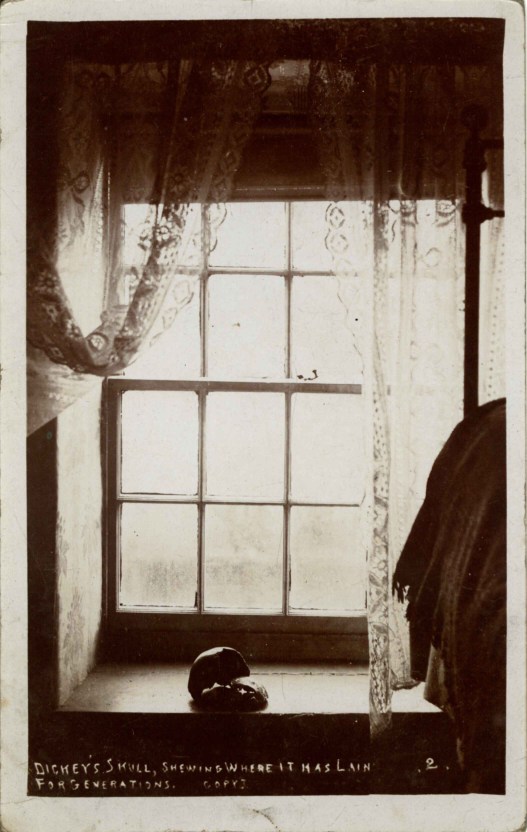
Photographs show a skull displayed at the farm, but they do not establish whose remains it was, how it came there or whether the person had previously been buried. Stories about its origins differ.
Dicky gets Famous
The legend was well known in the 19th century. A postcard in the Buxton Museum and Art Gallery collection shows the skull on a windowsill; its date has not been confirmed.
Local stories connected the skull with problems during construction of the Buxton–Whaley Bridge railway. A local history account describes a bridge collapsing and suggests soft foundations as a more likely explanation than a curse. Samuel Laycock’s poem “An Address to Dickie” appeared in the Buxton Advertiser in 1863 and was reprinted in an 1867 collection of Derbyshire ballads:
Neaw, Dickie, be quiet wi’ thee, lad,
An ‘let navvies an’ railways a ‘be;
Mon tha shouldn’t do soa, it’s too bad,
What harm are they doin’ to thee?
Deed folk shouldn’t meddle at o’
But leov o’ these matters to th’ wick;
They’ll see they’re done gradely, aw know-
Dos’t’ yer what aw say to thee, Dick?
The Legend Fades
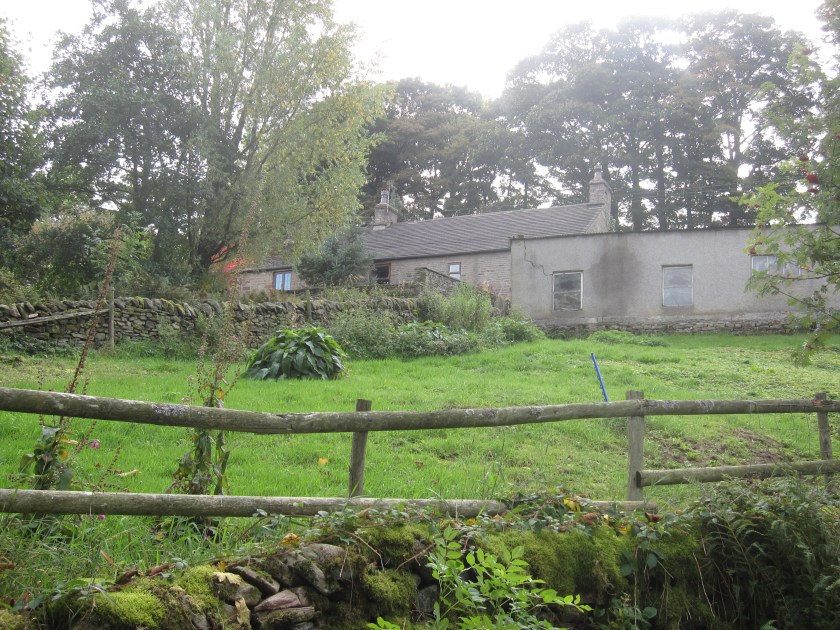
After hearing about Dicky a few times, I grew curious and went to visit the skull myself. I wasn’t too sure about the precise location of the farm but I knew it was a stone’s throw from another mystery I had recently investigated where rock drummer Matt Swindells reported finding what he believed was the lair of big cats. I was also aware that adjacent town Chapel-en-le-Frith was associated with a reported unexplained sighting recorded in 1716. The supernatural associations with this part of the world were starting to stack up. Wandering around Tunstead Milton on a gloomy day, the place seemed deserted and I found myself looking over my shoulder a lot. I found no one, alive nor dead, and went home, imbued with a sense of melancholy.
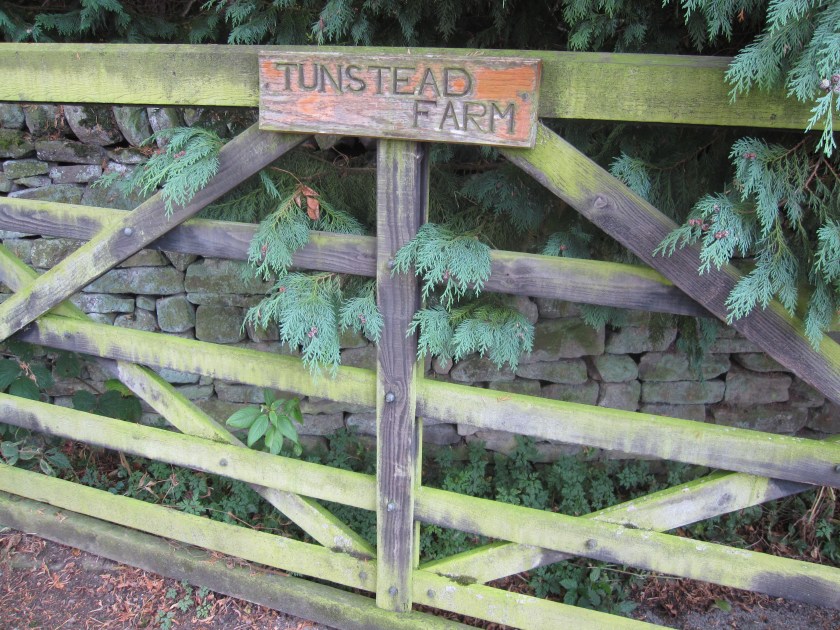
It was not until recently that someone who resides in the area told me that Dicky was laid to rest decades ago, most likely in nearby Taxal Church. I was on a wild goose chase. Apparently, the new owners of the farm were horrified by the infamous skull. They sought to do the right thing and without making a fuss, returned him to the ground from whence he came. Upon hearing this news, I had mixed feelings. It does seem wrong that someone’s remains should become a ghoulish exhibit but also disappointing to know the owner had decided to put the brakes on a Peak District legend. I assume they didn’t endure some terrible consequence. Of course, this is only what someone told me; if you know different, please get in touch.
Dicky’s Skull: The Movie
Amusingly, my friends at Buxton Museum were reviewing their archives recently and found a story about Dicky’s Skull; not another guidebook entry, but an entire semi-fictional script for the stage. The drama is no.9 in a series called Plays of Derbyshire Life and therefore features lots of authentic dialect. There’s lots of “aw, reet?” (a greeting translated as alright? And still quite common today) It was written by someone called Crichton Porteous; a writer with a name even more ridiculous than mine. There’s no date but the adverts suggest it was published around 1930.
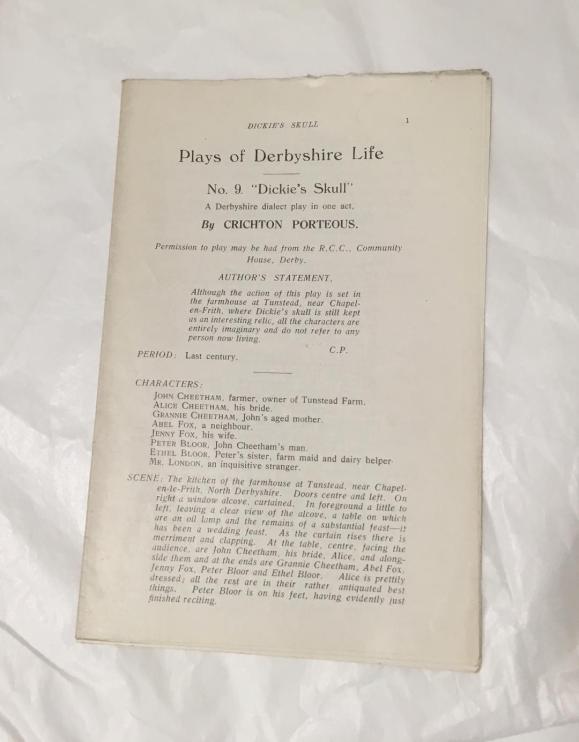
In the story, a sophisticated young lady called Alice marries in to a Derbyshire family who live at Tunstead Farm. It’s not long before it becomes apparent that the family are afraid of Dicky’s skull, particularly Grannie; the somewhat menacing old crone of the household. Alice and her husband have trouble pleasing Dicky on their wedding night (a problem most newlyweds face). Quite why an intelligent and cultured woman decides to get involved with a clan not too far removed from the one in The Hills Have Eyes is not explained. Alice soon gets naffed off with pandering to the rotten old skull and chucks it. Of course, Hell ensues.
Any Hollywood directors wanting to discuss translating the tale for the screen, don’t hesitate to get in touch.
Happy Halloween.
Darcus Wolfson for Explore Buxton.
Advertisement
Advertisement