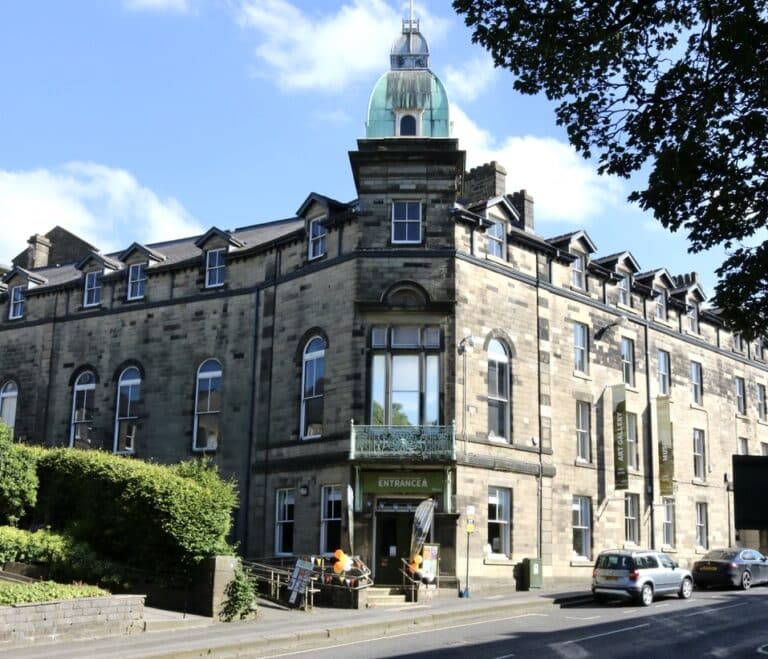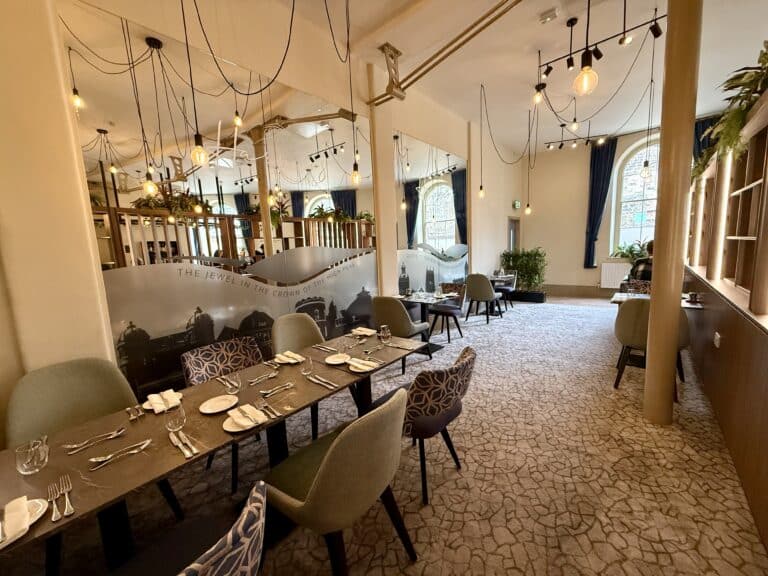
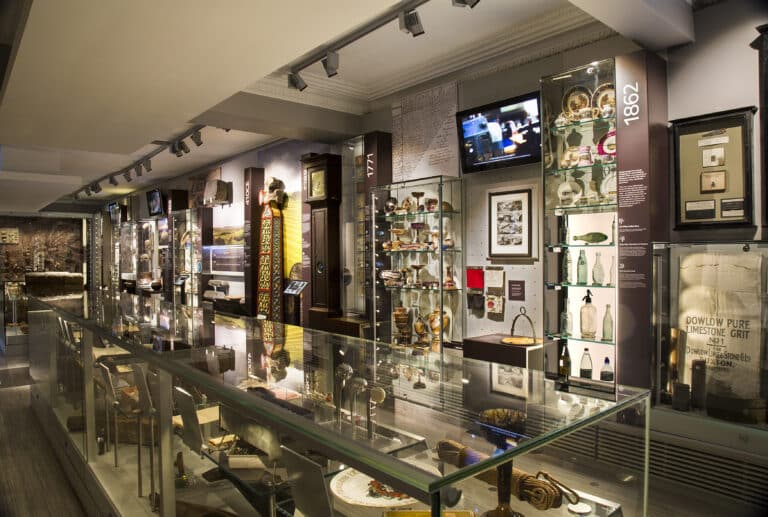
Visitor update: Wonders of the Peak was displayed at the museum’s former Terrace Road home. Buxton Museum and Art Gallery has since reopened in a temporary home next to Buxton Library on Kents Bank Road; the displays there are different. See the latest visitor information.
Wonders of the Peak told the story of the Peak District through its geology, archaeology and social history. The gallery at Buxton Museum & Art Gallery displayed around 1,200 objects, including loans as well as items from the museum’s collection.
The gallery’s second incarnation opened in 2017 and closed with the Terrace Road museum in 2023. Here’s a look back at 23 of our favourite objects from its displays.
Which are your favourites? Why do you like them? Do you have any memories about any of these objects? Get in touch, we’d love to hear from you.
1. One pound note – Buxton and High Peak Bank, 1813

London goldsmiths issued notes used for payments before the Bank of England began issuing its own notes after its founding in 1694. Their notes promised to pay the bearer; a similar promise still appears on Bank of England notes today. Read the Bank of England’s history of its notes.
2. Buxton Mineral Water bottles – various versions


Museum research found an 1855 newspaper advertisement for bottled Buxton Water. In 1873 the Buxton Mineral Water Company reported taking a licence for Codd’s bottles, which used a marble stopper and rubber seal. The museum also holds examples of the torpedo-shaped glass bottles known as Hamiltons.
3. The Buxton Hoard, found in 1975 at the Natural Baths


The coins were discovered during work at the Natural Baths in 1975. They span from the first century into the late Roman period and are thought to have been offerings at the spring. The Derbyshire Historic Environment Record also records jewellery found with the coins.
4. Roman bronze armlet found at Thirst House Cave, Deepdale

5. Roman jewellery, approximately 1,800 years old

Found in Thirst House Cave, Deepdale and Poole’s Cavern in Buxton – where pieces may also have been made. The Romans had arrived in Buxton by about 75AD. They called it Aquae Arnemetiae, after the goddess of the spring, Arnemetia. According to the museum, Buxton and Bath, known as Aquae Sulis, are the only two places in Roman Britain known to have the prefix Aquae, meaning waters. The Romans were attracted to Derbyshire’s mineral wealth. They hoped to find both silver and lead.
6. Bronze Age bowl from Hitter Hill, near Earl Sterndale, lent by the Trustees of the British Museum

The Derbyshire Historic Environment Record describes Bronze Age food vessels found in a burial mound on Hitter Hill.
7. Guide to The Buxton Gardens

Buxton promoted itself in various ways over the years but some things don’t change – as seen here.
8. The Hopton hand axe, estimated to be up to 350,000 years old

The museum estimates that this stone tool could be up to 350,000 years old. It is not known whether it was dropped by a prehistoric hunter in Derbyshire or carried here by ice and meltwater. If people were here then, they would have shared the landscape with animals such as cave lions, wolves and bears.
9. Ferodo brochure from 1947 commemorating 50 years of production

The museum identifies this as a 1947 anniversary brochure.
10. Bronze axes and spearheads found in Derbyshire

 Tool making is an essential skill for survival. Archaeological evidence places the return of people to southern Britain around 15,000 years ago, during the last deglaciation. They made many tools from many materials, including wood, antler and bone, but stone tools are more durable so they survive in the greatest number.
11. Bear skull from Thirst House Cave, Deepdale, about 70,000 years old
The museum estimates that the skull is about 70,000 years old.

12. Cave lion hind leg bones from Hindlow Quarry, Buxton
The museum has published different estimates for the age of the Hindlow cave lion bones: around 200,000 years in one account and 20,000 years in another.

13. Poster promoting travel to London by horse and carriage, which included pick-ups in Buxton

14. Canadian brown bear

The Buxton Bear became the museum’s unofficial mascot in the old Wonders of the Peak display. It is now on display at the museum’s temporary home.
15. St. Ann’s Well poster from 1862, displaying opening times for the well

16. Milk bottles used by local dairies

17. Corinthian bronze helmet

The helmet’s route into the museum collection is not known.
18. Collection of minerals

The former display included more mineral specimens than those pictured here.
19. The Wonders of the Peake by Charles Cotton, 1683 second edition
Cotton’s poem was first published in 1681; the copy pictured is the second edition, published in 1683.

20. National Registration identity cards and clothing ration books from the 1940s

The visible identity card names Marjorie G. Nichols of Chapel-en-le-Frith; the clothing book is dated 1947–48.
21. Elizabethan silver coins, reported found near Wormhill

22. Buxton and North Derbyshire Musical Festival programme, 1908

23. An 1884 Buxton tennis programme and men’s singles trophy


Buxton hosted a ladies’ doubles competition by 1884, as recorded in James Dwight’s 1886 book Lawn-Tennis. The Wimbledon Compendium dates the All England Ladies’ Doubles Championship at Buxton to 1884–1953, although other historical research dates the championship’s beginning to 1885. Wimbledon’s own ladies’ doubles championship began in 1913, after earlier non-championship doubles events there.
Advertisement
Advertisement