Winter Walks in Buxton
Looking for a walk near Buxton? These five ideas draw on Buxton Museum and Art Gallery’s 2025 guide and its accounts of objects found along the way. The objects described are not necessarily on display. The museum has since opened a temporary home next to Buxton Library.
In winter, dress for the weather and tell someone where you’re going. Check a map and conditions before setting out.
1. Grinlow Woods

The trails of Grinlow Woods, part of Buxton Country Park, lead through woodland planted in the early 1800s to screen the scars of quarrying and limeworking. Nearby Poole’s Cavern became a managed show cave in the 19th century.

Among objects associated with Grinlow is this farthing token, loaned by the British Museum for the former Wonders of the Peak display. In the 1600s, businesses issued local tokens such as farthings and halfpennies. One side reads “Francis Bennit in Grinlo”; the other bears a miner’s pickaxe head.
The museum has made a film about objects found in Grinlow and Poole’s Cavern, presented by the ghost of Mary Queen of Scots.
2. Burbage

Burbage makes a pleasant stroll from Buxton, with Bishops Lane and the surrounding paths offering a way to explore the area. Longer walks lead towards Axe Edge, Burbage Edge and the Goyt Valley; check your route and the weather before heading onto the moors.

There are traces of Buxton’s coal-mining industry on the edges. The museum describes this axehead, found in Burbage, as around 4,000–6,000 years old and made from granodiorite from North Wales. How it reached Burbage remains a mystery.
3. Goyt Valley

A few miles outside Buxton, the Goyt Valley was once home to farms, a gunpowder factory, a paint mill and the Errwood Hall estate. Some of the valley was flooded by Fernilee Reservoir in the 1930s and Errwood Reservoir in the 1960s. Errwood Hall was demolished in 1934; its ruins remain above the water. Read about Errwood Hall’s history.

According to the museum, fossil collector Elizabeth Dale found this Lepidodendron specimen in the Goyt Valley coal measures. These extinct scale trees grew in swamps around 300 million years ago.
4. Corbar Woods

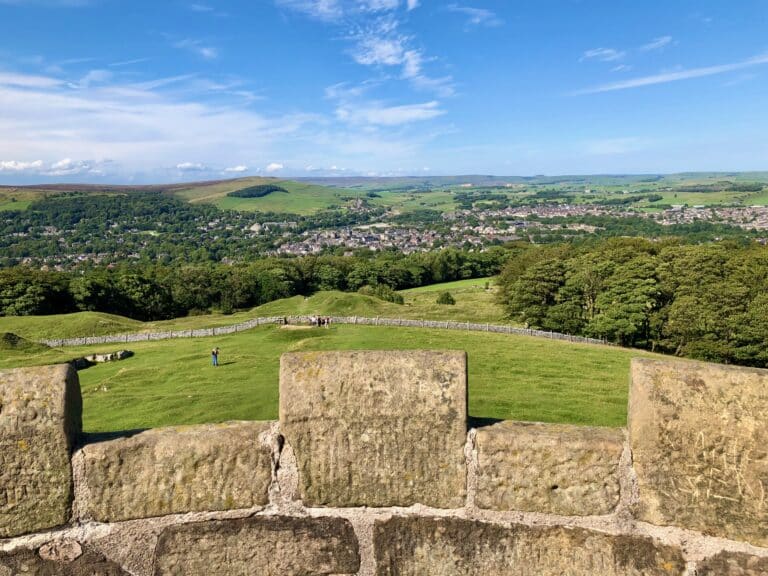
Corbar Woods has paths towards Corbar Hill and its cross. The first cross was erected in 1950 to mark the Holy Year; the present cross was installed in 2011, after its predecessor was cut down in 2010.

This ring was found in Corbar Woods, in what the museum records describe as mixed spoil from rabbit warrens. The museum suggests it is Georgian, reflecting the fashion for jewellery with classical designs.
5. Green Fairfield

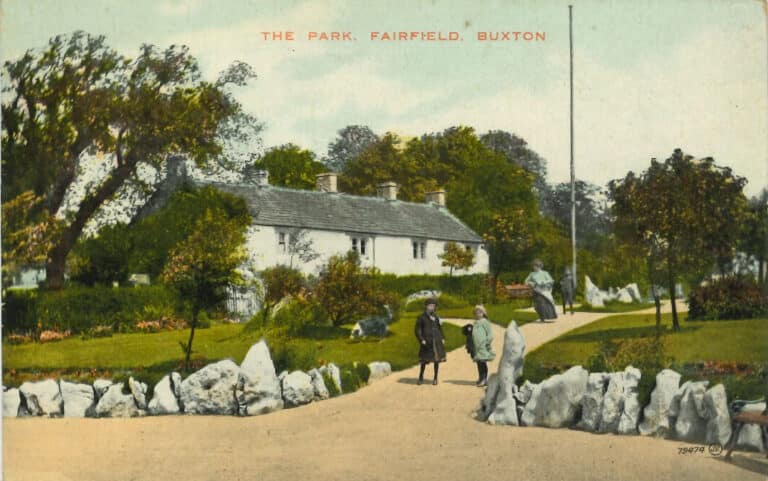
Fairfield was once a separate village and offers walks through its surrounding hills and dales. Fairfield Low is a Bronze Age burial mound within Skellybob Wood.

This magnificent Amethyst sample (above) was found in Waterswallows Quarry in Fairfield. There is no public right of way either to the disused quarry, nor to Skellybob Wood, but there are pleasant paths that orbit these locations, and you can contemplate what lies beneath your feet.
The museum has also made a film about Fairfield’s heritage.
BMAG has loads more local history on their website here.
Buxton Museum & Art Gallery – temporary home next to Buxton Library
The museum previously located in Peak Buildings in Buxton closed to the public in June 2023 as a precautionary measure as parts of the building were potentially identified as being unsafe. Although initially it was a temporary closure, a decision to permanently relocate the museum from Peak Buildings was announced in May 2024.
Derbyshire County Council says work continues to find a permanent home for the museum in the town.
The museum’s temporary building is next to Buxton Library on Kents Bank Road, Buxton. The library’s postcode is SK17 9HW.
T: 01629 533540
The museum is now in a temporary building next to Buxton Library on Kents Bank Road. Find Buxton Library on Google Maps.
Advertisement
Advertisement