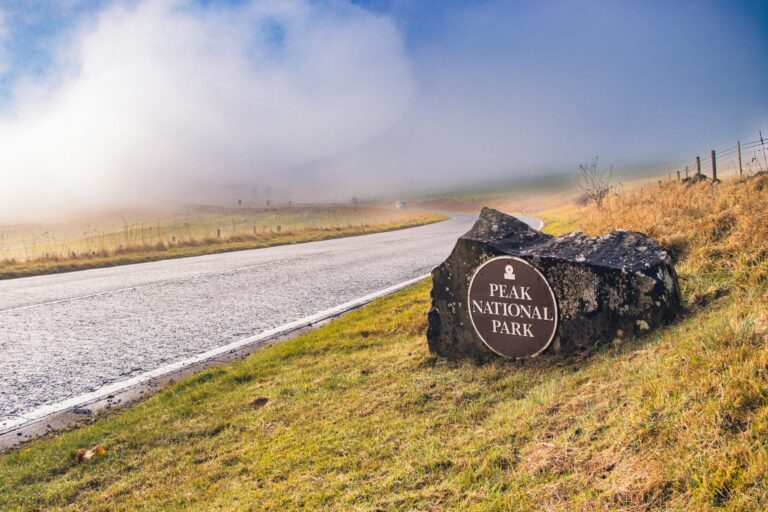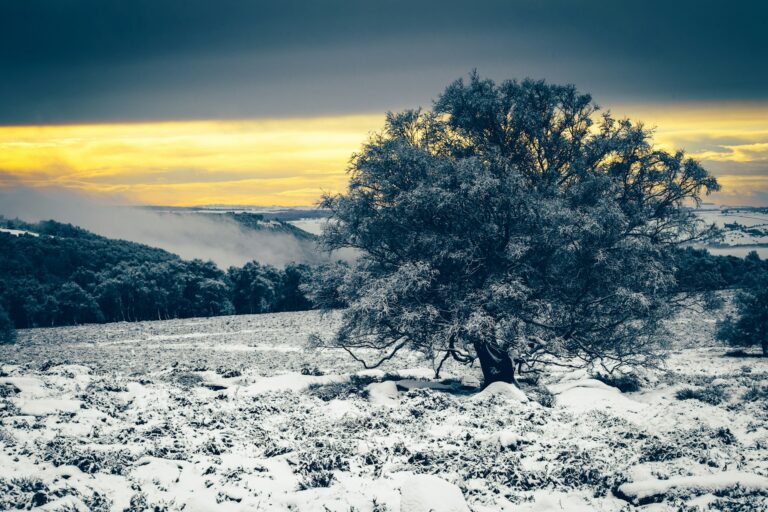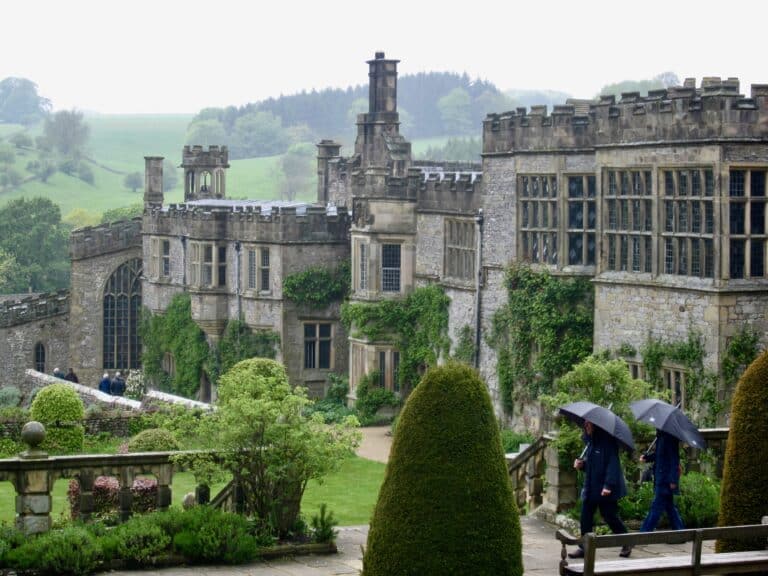
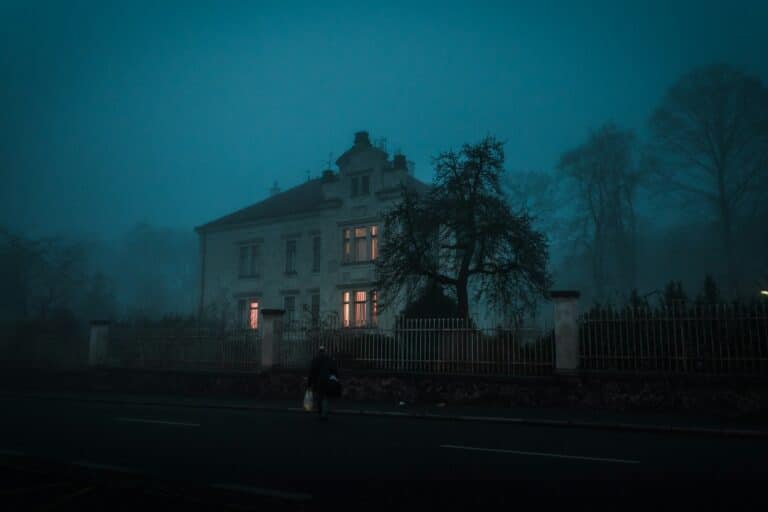
The Peak District and Derbyshire are rich in ghost stories. Here are some of the legends and reported experiences associated with their castles, pubs, villages and landscapes. These are stories and reports, not evidence of paranormal activity.
Explore tales from the Peak District and beyond, including historic buildings, moorland and local beauty spots.
Do you have a ghost story or have you experienced something unexplained in the Peak District? We’d love to hear from you!
The Legless Soldier (and other apparitions!) at the Castle Hotel Castleton
The Castle Hotel in Castleton has stories of a jilted bride, a nurse, a legless soldier and a man in a pin-striped suit. These are reported apparitions, not independently verified accounts.
Bolsover Castle and its ‘Ghost Book’
Built on the site of a medieval fortress, Bolsover Castle is a 17th-century aristocratic retreat. English Heritage says staff keep a “ghost book” for visitors to record unusual experiences. Stories include a woman and child in the kitchen and ghostly horses; staff and visitors have also reported unexplained noises, smells and objects moving.
Eyam Village and Eyam Hall
In 1665–66, plague devastated Eyam. A traditional account traces the outbreak to cloth sent from London to tailor Alexander Hadfield; his assistant George Viccars died before the tailor. The precise origin of the outbreak remains uncertain. The epidemic lasted around 14 months and killed about 260 people. Under the leadership of William Mompesson and Thomas Stanley, villagers agreed to isolation, with neighbours providing supplies. See the village history and a review of the historical evidence.
Older accounts give a much smaller population and survivor count. Eyam Museum research identifies at least 700 people living in the village when plague arrived.
Eyam remains known for its plague history and has many ghost stories. Tales associated with the village include a woman in a blue smock, a servant at Eyam Hall and unexplained footsteps at the Miners Arms. These stories should not be taken as established fact.
Poltergeist Activity at the Old Bell Hotel, Derby
The Old Bell Hotel on Sadler Gate is a much-altered 17th-century building and former coaching inn. Its ghost stories include a woman in a blue dress, a serving girl and unexplained movements of objects. The venue describes its 2013–15 restoration in its own history.
Murdered Lovers at Winnats Pass, Castleton
A local legend tells of two eloping lovers, usually called Allan and Clara, who were robbed and murdered in Winnats Pass. The details vary between tellings, and research into the story notes that no record of the couple has been found. Their ghosts are said to haunt the gorge.
Hardwick Hall
Built from 1590 for Elizabeth Talbot, Countess of Shrewsbury, Hardwick Hall was the home of Bess of Hardwick, a wealthy and influential Elizabethan figure. One story says her apparition appears in the Long Gallery.
Kinder Downfall and the Legend of the Mermaid’s Pool
Kinder Downfall is a waterfall on the edge of Kinder Scout. The nearby Mermaid’s Pool features in stories of a water spirit said to appear at Easter.
The age and origin of the Mermaid’s Pool legend are uncertain.
Folklore suggests that staring into the waters will grant visions of the future, and, as is common with many water spirits the Mermaid has a treacherous nature either granting eternal life or pulling under those who have glimpsed her.
Royal Derby Hospital Hauntings
In 2009, staff at Derby City General Hospital reported seeing an unexplained figure. Contemporary reporting said hospital managers consulted the chaplaincy; the hospital denied reports that it had summoned an exorcist. The sightings remain reports rather than evidence of a ghost.
The Legend of Dicky’s Skull at Tunstead Farm, Nr. Chapel-en-le-Frith
Dicky’s Skull is a local legend associated with Tunstead Farm near Chapel-en-le-Frith. Photographs show a skull once displayed there, but its identity and origin are uncertain. Different versions tell of a murdered woman or a man named Ned Dixon. Stories say misfortune would follow its removal.
Local stories blamed Dicky for problems during construction of the Buxton–Whaley Bridge railway. A local history account discusses a bridge failure and suggests soft foundations rather than a curse. The story also inspired Samuel Laycock’s 1863 poem “An Address to Dickie”.
The skull is also said to have been stolen and taken to Disley, where the thieves were plagued by frightening disturbances until they returned it to the farm. Another story says an owner buried the skull, then returned it to the farm to restore peace.
Mysterious Ladybower Reservoir
During the Second World War, RAF 617 Squadron trained over the nearby Derwent and Howden reservoirs. In the wider Peak District, there are reports of ghostly aircraft, including a Lancaster bomber.
A USAAF Dakota crashed at James’s Thorn on Bleaklow on 24 July 1945, near the site of an earlier Lancaster crash. Seven people died, according to an air-crash history.
There have been other aircraft crashes on the surrounding moors. Stories of ghostly flights are separate from these documented accidents.
People have also reported strange lights in the area; whether any reports are connected is unknown.
The Devil’s Elbow, between Glossop and Woodhead
A sharp bend on the B6105 Woodhead Road near Glossop is known as the Devil’s Elbow. It has inspired stories of mysterious lights and the following local legend.
In legend the Devils Elbow is said to have been a meeting place for two lovers, their father was against the union and swore that he would rather the Devil take his daughter than have them meet again. On their next meeting the Devil appeared and chased the terrified couple across the moor.
As the Devil reached out to claim his prize a mighty voice cried out and the devils bent arm turned to stone. He ripped it out and threw it on the moor forming the bend in the road.
More recent accounts tell of a dark shape seen crossing the road near the bend.
Phantoms at Tissington Hall
One Tissington Hall story associates a haunting with Wilhelmina FitzHerbert, said to have died after her nightdress caught fire in 1862. Other tales describe a man in black, strange noises and a shaking bed; the details have not been independently confirmed.
Roman Ghosts at Bleaklow Head
Stories of Roman soldiers on Bleaklow have prompted speculation about an undiscovered road. The stories do not establish that a road existed.
Longendale – The Haunted Valley
Longendale is a valley edged by the Bleaklow moors. Shining Clough lies on Bleaklow’s northern edge, overlooking the valley; the landscape has inspired many stories of strange lights.
Aircraft wrecks on the surrounding moors include sites from the Second World War.
Stories of ghostly encounters, unexplained lights and UFO sightings have given the area a reputation as “The Haunted Valley”.
Seven Stars and George the ‘Mischievous’ Ghost
Lyme Park
The National Trust’s history traces the Legh family’s ownership of Lyme to a grant in 1398. Sir Peter Legh, son of the original grantee, died in 1422. A local story links him to a funeral procession at Lyme.
Local tradition places his burial at Knight’s Low at Lyme Park. A National Trust heritage record notes that surveys found no trace of the reported burial cairn.
In the story, a woman named Blanche follows the procession and later dies beside the River Bollin.
The tale says she was buried where a meadow became known as “Lady’s Grave”.
In the story, a ghostly funeral procession makes its way through the park, followed by Blanche in white. The Long Gallery has also been known as the “Ghost Room”.
Another tradition says Mary, Queen of Scots, slept in the house while she was a prisoner. A story also describes a priest’s skeleton beneath the floorboards. These claims and reports of unexplained scents and apparitions have not been independently confirmed.
Stoney Middleton and the Haunted Moor
Local tradition tells of Black Harry, a highwayman associated with the moors between Stoney Middleton and Wardlow. Some accounts say his body was displayed at Wardlow Mires, though the details of his capture and punishment are disputed. His spirit is said to haunt the road on horseback. Read a local history discussion of the legend.
Peveril Castle’s ghost stories
Peveril Castle overlooks Castleton. It was established in the 11th century; Henry II added the keep in the 12th century, according to English Heritage. The castle is said to be haunted by a white knight, a horse and a hound, and visitors have also reported a singing voice.
Haddon Hall
One local story tells of Prince Arthur, elder brother of Henry VIII, seeing a ghostly vision near Haddon Hall that foretold his death. A Bakewell and District Historical Society study describes the story as fiction and says there is no evidence that Arthur visited the area.
Arthur married Catherine of Aragon in 1501 and died in 1502. His brother Henry later became king and married Catherine. The words attributed to Arthur in the Haddon story are part of the legend.
Derby’s Ye Olde Dolphin Inne
Derby’s Ye Olde Dolphin Inne occupies a late 16th-century building. The commonly quoted 1530 date is disputed; CAMRA describes the building as later. The pub is associated with several ghost stories.
Stories associated with Ye Olde Dolphin Inne include the Flying Scotsman, the Blue Lady and a child on the stairs. Another tale, known as the “Vault of Terror”, tells of a doctor who began dissecting a woman he believed was dead. In the story she awoke and died shortly afterwards, and some pub-goers have reported hearing screams.
Enjoyed reading this? Read 4 Creepy and Unusual Places That Have Experienced Unusual Activity in Buxton
Advertisement
Advertisement