Archive: this guide described plans for VE Day’s 75th anniversary on 8 May 2020.
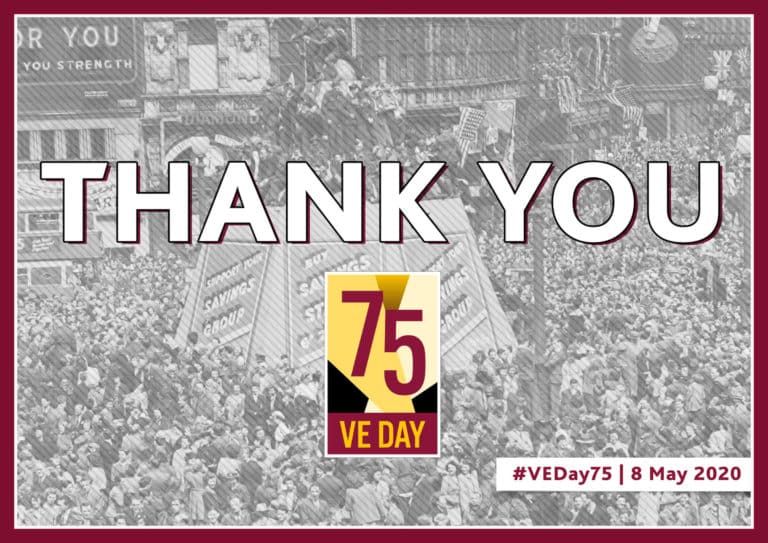
Friday 8 May 2020 marked the 75th anniversary of VE Day. In 1945, street parties and crowds in Trafalgar Square celebrated the end of the Second World War in Europe; fighting continued in Asia and the Pacific.
The coronavirus pandemic led to the cancellation of many planned public celebrations. The anniversary programme included events at home and online, with the Royal British Legion playing a central role.
UK-wide events planned for 8 May 2020
The announced programme included:
- 11am – National two-minute silence: people were invited to remember the wartime generation and reflect on the impact of COVID-19.
- 11.15am – Royal British Legion livestream: presenter Sonali Shah hosted a programme bringing together wartime and later generations.
- 2.45pm – The Announcement of Victory, BBC One: the programme included Churchill’s 1945 victory speech, originally broadcast at 3pm.
- 6pm – Katherine Jenkins at the Royal Albert Hall: a recorded concert from the empty hall was streamed online, including a virtual duet with Dame Vera Lynn.
- 8pm – VE Day 75: The People’s Celebration, BBC One: the BBC and Royal British Legion presented an evening of music and memories.
- 9pm – The Queen’s address: Elizabeth II’s pre-recorded message was broadcast at the same time her father, King George VI, had addressed the nation in 1945. A nationwide sing-along of We’ll Meet Again followed.
Vera Lynn’s ‘We’ll Meet Again’ – Lyrics
The 2020 broadcast invited viewers to join a sing-along of the song made famous by Vera Lynn. The Royal British Legion has the lyrics.
Family fun for everyone
Get the colouring crayons out, fire up the oven for some war time baking, dress up your house with flags and bunting, there’s plenty of activities for all the family to enjoy and young children can learn more about this historic day for Britain and Europe.
Decorate your house with homemade bunting, colouring-in and more…

Simple paper bunting is really easy to make and all the family can get involved and colour the flags! Check out this really easy How to make VE Day bunting YouTube tutorial; all you need is plain white paper and some crayons or felt tips!
PlanBee lists VE Day activities and resources, including a bunting template, recipes and diary templates.
Make your own WW2 spitfire
Children (and grown ups!) can make their own paper Spitfire aeroplane with this great printable template here: twinkl.co.uk/resource/t2-t-803-simple-ww2-spitfire-glider-activity-paper-craft
VE Day Learning Resources

Illustrative photograph: James Harris / Unsplash.
The Royal British Legion have some excellent school resources here and provide an overview of VE Day and its relevance today: britishlegion.org.uk/get-involved/remembrance/teaching-remembrance.
Make your own afternoon tea
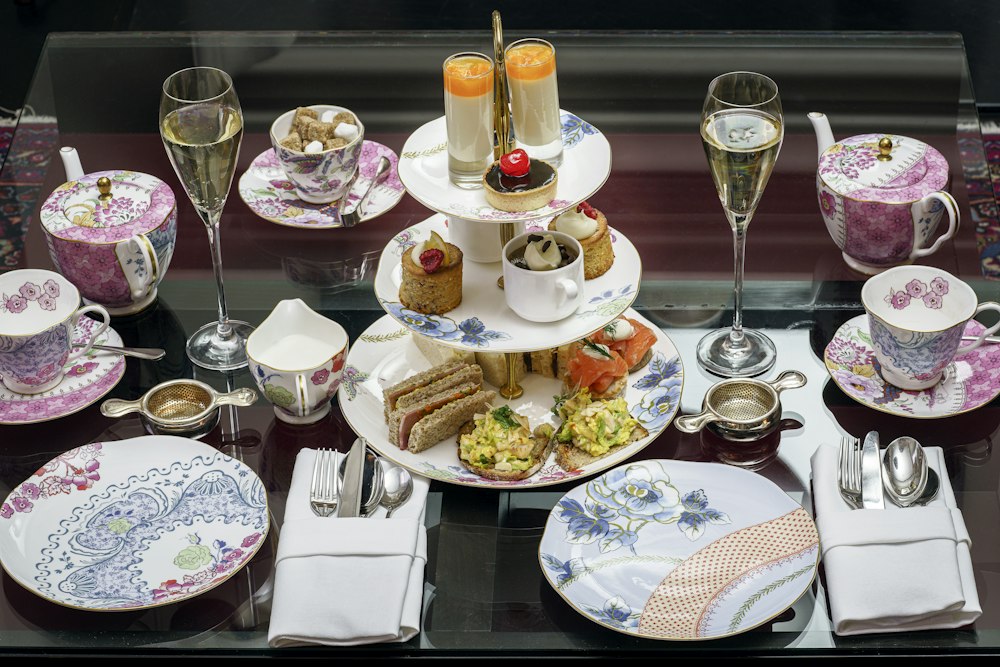
Afternoon tea is something many of us love right? Scones with clotted cream and jam, sumptuous home made cakes, perfectly cut sandwiches and endless cups of tea are the classic elements of this quintessential English tradition and it’s an ideal accompaniment to VE Day festivities. If you fancy making your own from scratch, baking your own cakes and scones or you’d prefer to buy everything ready made – we like this BBC Goodfood Guide to the Easiest ever Afternoon Tea which tells you everything you need to know.
1940s World War II Make-Up
Get into the spirit of wartime Britain and try out this 1940s inspired makeup tutorial from English Heritage:
What happened on VE Day in 1945?
VE Day marks the Allied victory in Europe and Nazi Germany’s surrender in May 1945. The Second World War continued in Asia and the Pacific.
On 30 April 1945, with Berlin surrounded by opposing forces, the leader of the Nazi party Adolf Hitler died by suicide.
Karl Dönitz succeeded Hitler as German head of state and sought an end to the war with the Allies, which included Britain, the United States, France and the Soviet Union.
While VE Day marks the surrender of Nazi Germany after six years of fighting, it did not signify the absolute end of the Second World War.
Japan announced its surrender on 15 August 1945, after the atomic bombings of Hiroshima and Nagasaki and the Soviet invasion of Japanese-occupied Manchuria. Japan signed the formal surrender on 2 September.
In his 3pm radio address on 8 May 1945, Prime Minister Winston Churchill warned that work and effort still lay ahead.
How was Victory in Europe Day celebrated in 1945?
Pubs were permitted to stay open later and dance halls extended their hours as people celebrated.
The Board of Trade allowed red, white and blue bunting to be bought without ration coupons, according to Imperial War Museums.
In London, crowds of thousands packed the streets in areas including Trafalgar Square and the Mall leading up to Buckingham Palace, where the King, Queen, Princess Elizabeth and Princess Margaret waved at them from the balcony.
Advertisement
Advertisement