Archive: This article describes the solar eclipse of 12 August 2026. The next partial solar eclipse visible from Buxton is on 2 August 2027.
The 2026 solar eclipse in Buxton
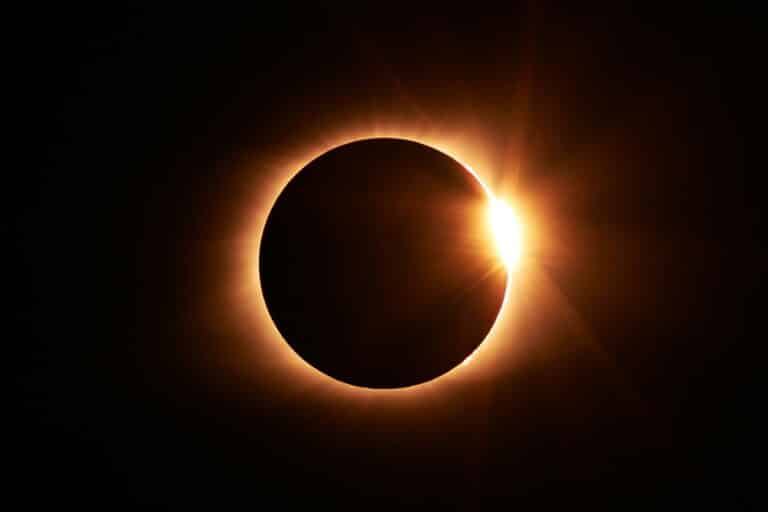
On 12 August 2026, the Moon passed in front of the Sun, producing a partial solar eclipse over Buxton and the Peak District. The eclipse was total along a narrow path including parts of Greenland, Iceland and northern Spain; Britain was outside that path.
What time was the 2026 eclipse in Buxton?
Timeanddate’s calculation for Buxton gives these approximate local times (British Summer Time):
- Partial eclipse began: 6.13pm
- Maximum eclipse: 7.10pm
- Partial eclipse ended: 8.04pm
- Duration: approximately 1 hour 50 minutes
The calculated maximum eclipse magnitude was 0.924. This means the Moon covered about 92.4% of the Sun’s apparent diameter; that figure is different from the percentage of the Sun’s disc area covered.
The Sun was low in the western sky, so a clear view towards the west was needed. Visibility also depended on cloud cover.
How much of the Sun was covered?
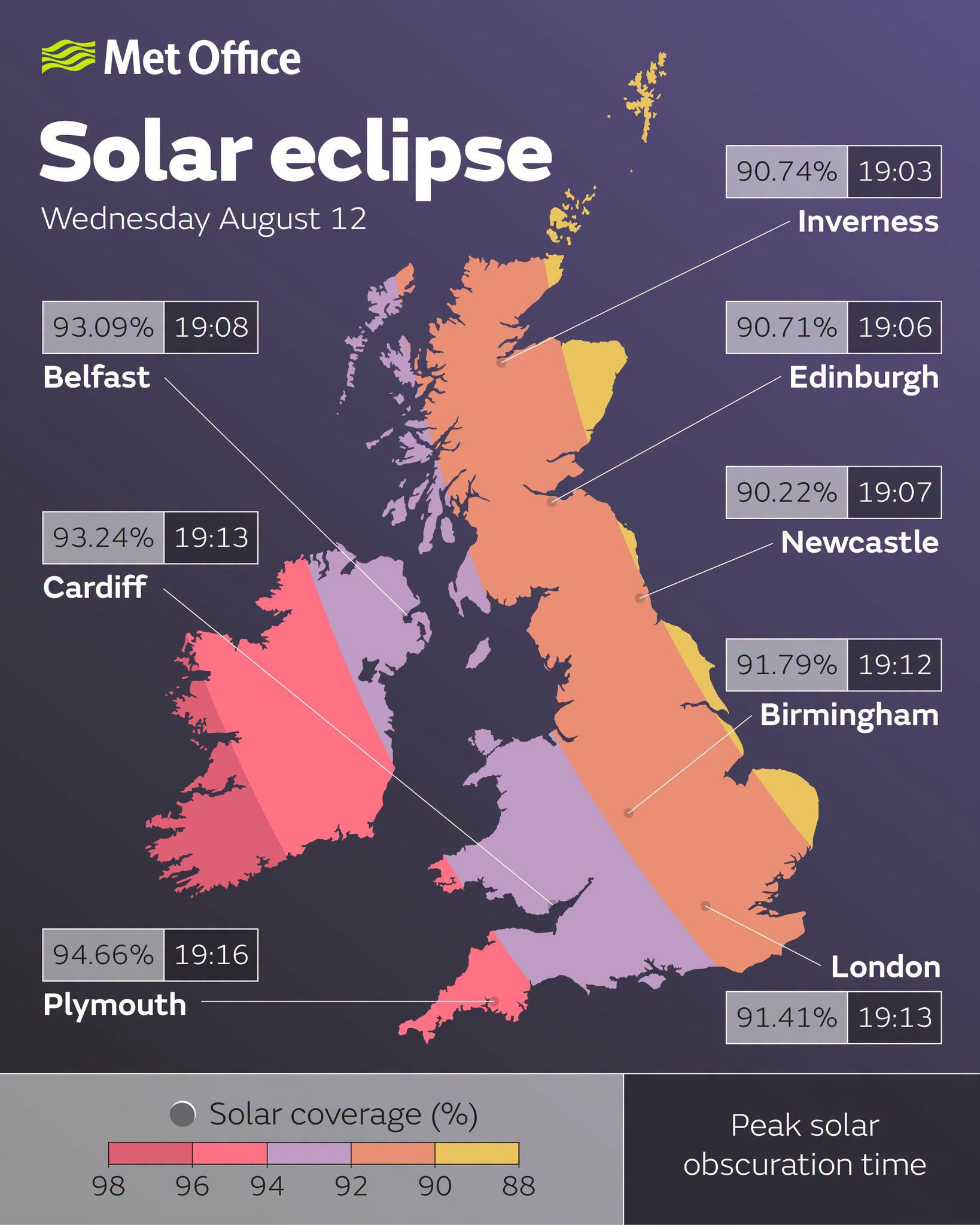
Across the UK, the Met Office estimated maximum coverage of the Sun’s disc from around 88% in the far north-east of Scotland to 96% in Cornwall. Buxton’s eclipse was partial, so the Sun was not completely covered.
The next solar eclipse in Buxton
Another partial eclipse is due on Monday 2 August 2027. For Buxton, it is calculated to begin at about 9.05am, reach its maximum at 9.59am and end at 10.55am, local time. See Timeanddate’s local eclipse details.
What causes a solar eclipse?
A solar eclipse occurs when the Moon passes between Earth and the Sun, blocking some or all of the Sun from view.
Watching a solar eclipse safely
Never look directly at the Sun during a partial eclipse without suitable protection, even through cloud. Ordinary sunglasses are not safe. The UK Health Security Agency recommends genuine eclipse glasses or handheld solar viewers meeting ISO 12312-2:2015(E); check that the filters are not damaged. A pinhole projector is an alternative: keep the Sun behind you and look at its projected image, never through the pinhole.
Do not look at the Sun through a camera, binoculars or telescope while wearing eclipse glasses: these instruments need special solar filters fitted at the front. See NASA’s eclipse safety guidance.
Advertisement